In conveyor lubrication, how you apply lubricant can matter just as much as what lubricant you use. The right application method improves film formation at wear points, reduces waste, and keeps surrounding equipment and product areas cleaner.
Three common application methods are:
- Precision lubrication shots (metered delivery via ejection tubes)
- Spray nozzles (wider fan-pattern coverage)
- Brush lubrication (contact application using brush/felt/foam)
Each has a place, but they serve very different purposes depending on conveyor design, chain type, chain motion, speed, load, and the facility environment.
At Mighty Lube, our philosophy is simple: apply the right amount of lubricant, in the right place, at the right time. When you understand what each method is designed to do, it’s much easier to maximize chain life, cut maintenance, and run a cleaner operation.
What Are Precision Lubrication Shots?
Precision lubrication shots use ejection tubes to deliver a metered amount of lubricant directly to a specific lubrication point—typically the chain pin / bushing interface or another targeted wear surface.
Instead of coating a broad area, this method focuses on accuracy and consistency. The goal is to apply lubricant where it can penetrate into the joint, form a protective film, and reduce friction at the surfaces that actually wear.
Why Use Precision Lubrication Shots on Conveyor Chains?
Conveyor chains live a hard life. They run at different speeds, carry different loads, and pass through environments ranging from clean and dry to dusty, wet, corrosive, hot, or washdown-heavy. In those real-world conditions, “spray-and-pray” lubrication usually creates one of two problems:
- Not enough lubricant where it matters most (accelerated wear).
- Too much lubricant everywhere else (mess, fling-off, contamination risk, wasted product).
Precision lubrication shots, also known as metered lubrication or targeted chain lubrication, address both issues by delivering a controlled dose precisely where friction and wear occur, at a repeatable interval.
Key advantages of precision shots:
- Better protection at internal wear points (where chain elongation begins)
- Lower lubricant consumption
- Cleaner conveyors and surrounding equipment
- Reduced risk of over-lubrication, drip, and contamination
Best fit: Continuous conveyors with a fixed chain path and repeatable lubrication point alignment.
What Are Lubrication Spray Nozzles?
Spray nozzles apply lubricant across a wider area using a fan spray pattern. Rather than aiming at a single pinpoint lubrication point, spray nozzles distribute lubricant across multiple chain components or a broader moving surface.
Why Use Spray Nozzles?
Spray nozzles are often chosen when the chain position can vary, especially when a conveyor:
- Moves side-to-side
- Has variable tracking
- Shifts due to load changes, guides, or wear
In those situations, a fixed ejection tube may miss the lubrication point or get bumped out of alignment, while a spray pattern increases the likelihood of consistent coverage even as the chain moves.
Tradeoffs to note (and why setup matters):
- Wider coverage can increase the chance of overspray.
- Lubricant usage is often higher than for precision shots.
- Drip management (guards, drip pans, shielding) is often recommended, depending on the environment.
Best fit: Applications where coverage is more important than pinpoint accuracy, or where precision alignment can’t be maintained reliably.
What Is Brush Lubrication?
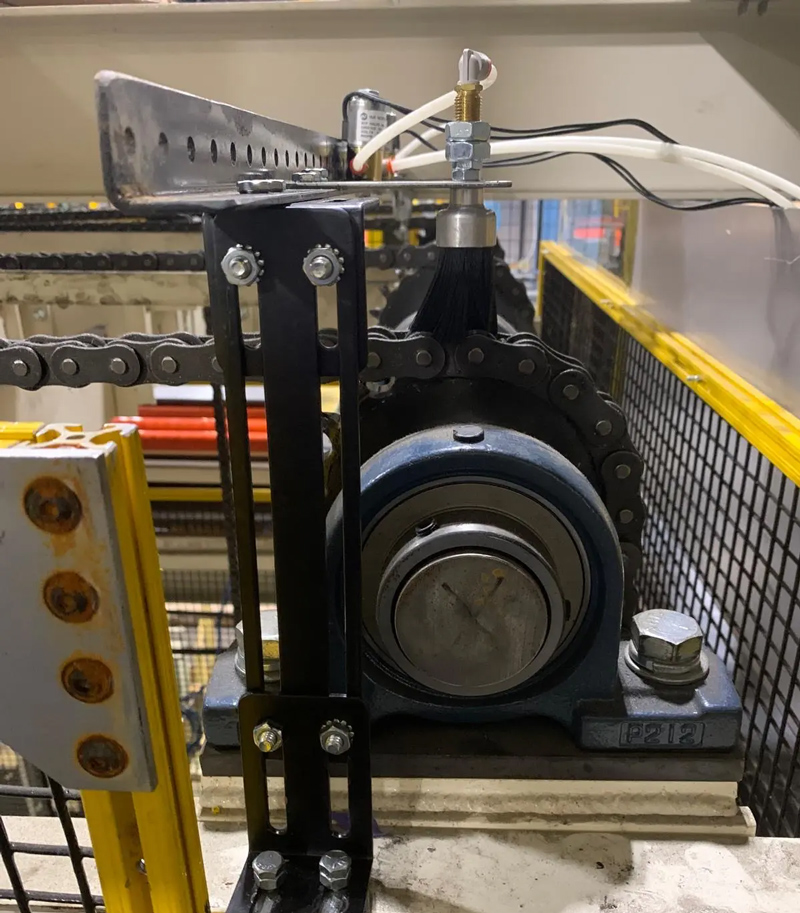
Brush lubrication applies lubricant through direct contact using a brush, felt, or foam applicator. Lubricant is supplied from a small reservoir or automatic lubrication system, and the applicator transfers it as the chain passes by.
Because the brush stays in contact with the chain, lubrication is applied consistently across the contact surface rather than delivered to a single point.
Why Use Brush Lubrication?
Brush lubrication is often selected when simplicity, flexibility, and tolerance to minor chain movement are priorities. Compared to nozzles or ejection tubes, brush systems reduce aiming and alignment challenges.
Where brush lubrication shines:
- When full surface wetting is desired.
- When chain tracking varies slightly.
- When conveyors run at slower to moderate speeds.
- When light cleaning is helpful. Brush contact can remove loose debris as the lubricant is applied.
Important note: Brushes can also move debris along the chain if not managed, so inspection and maintenance of the applicator (and the chain cleanliness strategy) still matter.
Best fit: Forgiving applications where steady contact-based lubrication and simpler installation are desired.
Chain Types and Application Considerations
Choosing between precision shots, spray nozzles, and brush lubrication often comes down to two things:
1. Chain design (where are the wear points, and can lubricant penetrate to them?)
2. Conveyor motion (does the chain track predictably or wander?)
Chains Best for Precision Lubrication Shots
All Chains that are Consistent
- Fixed travel path.
- Defined pin and bushing interfaces.
- Benefit most from lubricant penetration, not surface coating.
Precision-guided conveyors
- Minimal side-to-side movement.
- Ideal for repeatable shot placement.
For these applications, precision shots typically reduce lubricant consumption, keep the chain cleaner, and help prevent contamination of surrounding equipment.
Chains Best for Spray Nozzles
Slat conveyors / applications with variable tracking / Log Chains
- Chain movement may vary.
- A larger surface area can benefit from broader coverage.
In these cases, spray nozzles provide flexibility and help ensure lubricant reaches the chain if alignment shifts.
Chains Best for Brush Lubrication
- Slower to moderate-speed conveyors
- Debris-prone environments where light cleaning helps
Brush lubrication offers a more forgiving solution, maintaining lubrication through direct contact even when tracking varies slightly, while also helping manage loose debris on the chain surface.
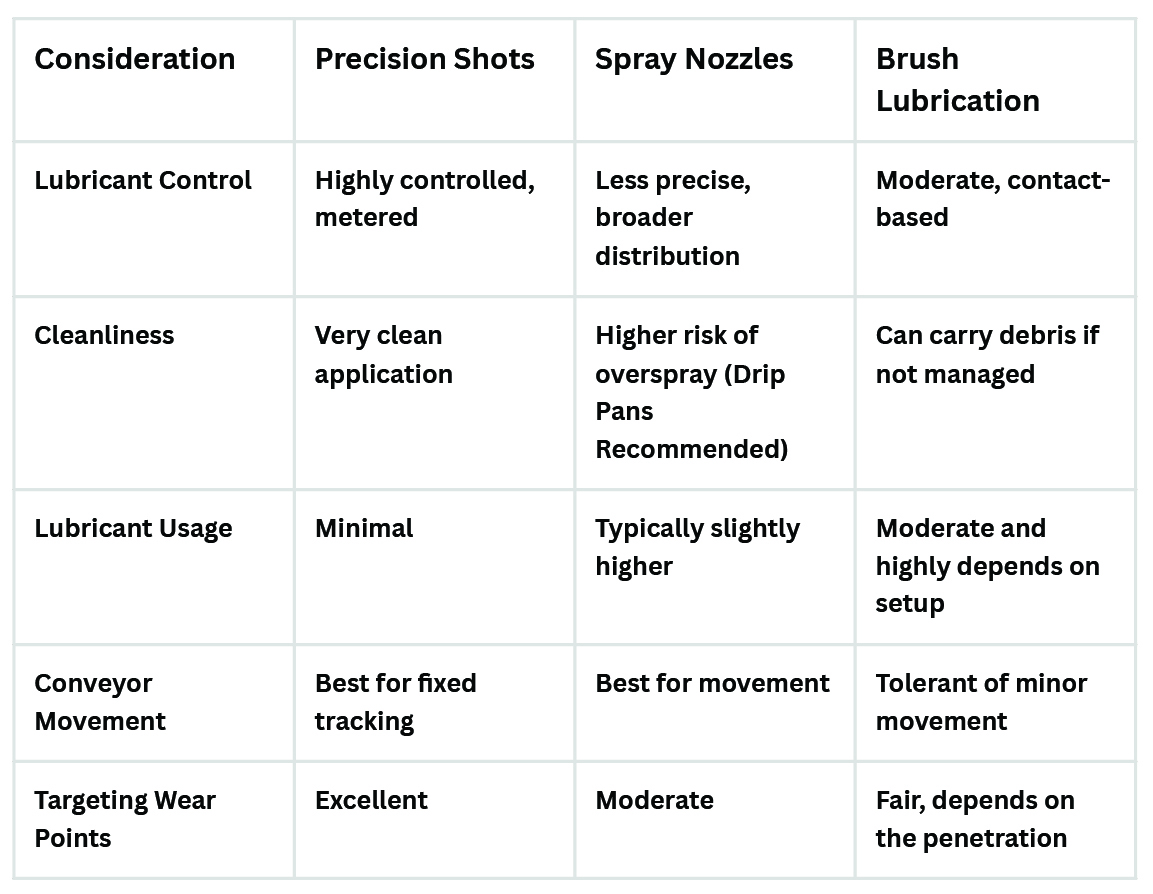
Precision vs. Coverage: A Practical Comparison
When One Size Doesn’t Fit All
Lubrication strategy isn’t always an either/or decision. Some conveyor systems benefit from a combination of methods depending on chain type, conveyor layout, speed changes, or operating zones.
At Mighty Lube, lubrication systems are engineered around the application, not the other way around. The goal stays the same: protect the chain while reducing waste, mess, and maintenance time.
Key Takeaways
Choosing the right lubrication method is about matching the application method to the reality of your conveyor: how it moves, where it wears, and what the environment does to it.
- If your chain tracks reliably and you want maximum efficiency and cleanliness, precision lubrication shots are often the best choice.
- If the chain position varies and consistent coverage is the priority, spray nozzles offer flexibility.
- If you want a forgiving, simple method that tolerates minor movement and can help with loose debris, brush lubrication is a strong option.
When lubrication is applied correctly and consistently, you get what every operation wants: longer chain life, fewer breakdowns, less cleanup, and a more reliable conveyor system.