
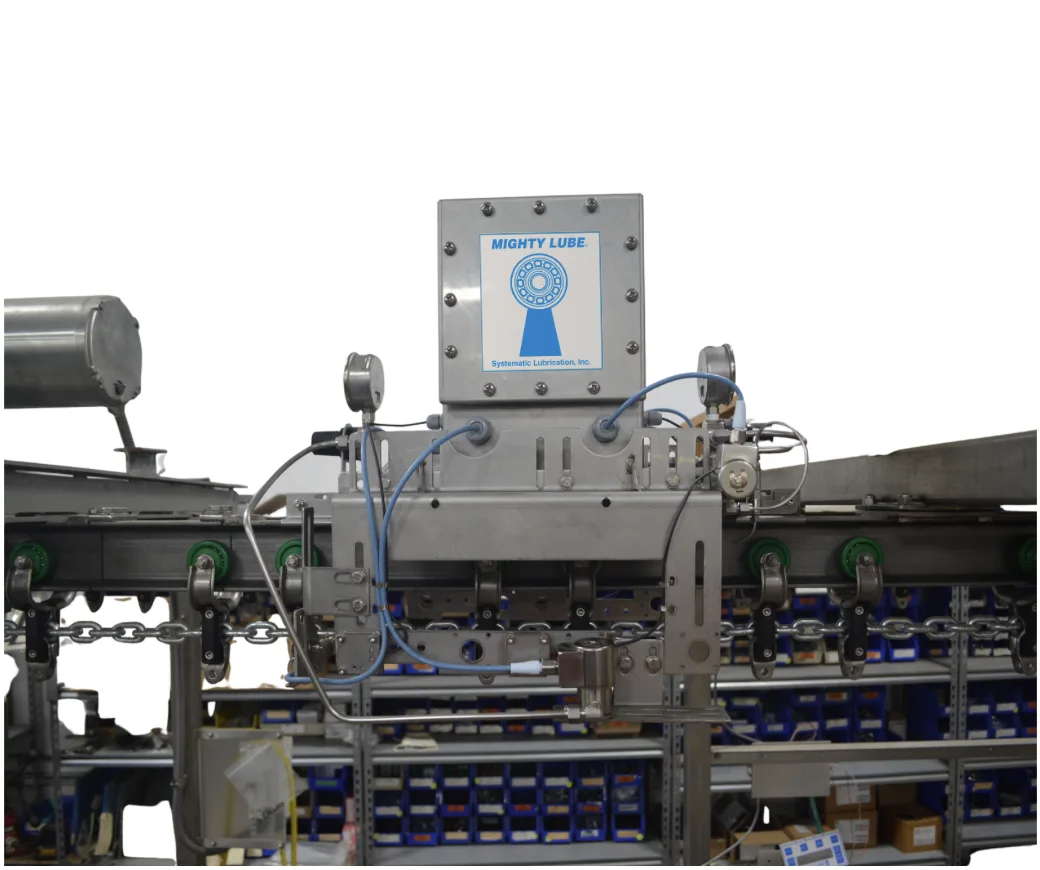
Food processing conveyors operate in some of the most demanding manufacturing environments. Moisture, washdowns, sanitation chemicals, temperature changes, and continuous production can make it difficult for maintenance teams to spot developing problems before they affect the line.
In an environment where reliability, cleanliness, and production uptime are all critical, occasional visual inspections may not provide enough information. Reliability teams need continuous visibility into conveyor conditions, chain wear, and lubrication activity. Here are four capabilities that can give food processing plants a clearer view of conveyor health.
1. Equipment Built for Harsh Processing Environments
Monitoring equipment in a food plant must withstand conditions that standard industrial components may not encounter. Waterproof stainless-steel construction helps protect monitoring components from moisture, frequent washdowns, and other challenging conditions commonly found in food processing facilities. This durable design allows monitoring equipment to remain installed near the conveyor, where it can continuously gather information without disrupting normal sanitation and maintenance routines.
Selecting equipment designed for the environment is an important first step. If the monitoring hardware cannot withstand the conditions surrounding the conveyor, reliability teams may be left with inconsistent information or no information at all.
2. Real-Time Visibility Into Conveyor Vitals
A conveyor can begin showing signs of trouble long before it stops production. Small changes in operating conditions may indicate increasing friction, mechanical resistance, improper tension, or another developing issue.
Real-time conveyor monitoring gives maintenance teams visibility into critical operating data such as:
- Drive amperage
- Conveyor speed
- Take-up pressure
- Drive hours
- Vibration
- Temperature
- Lubrication cycles
Instead of relying only on readings collected during scheduled inspections, teams can see how these conditions change while the conveyor is operating. This information helps establish a normal operating baseline for the system. When a reading begins moving outside its expected range, the team has an opportunity to investigate the change before it develops into a larger reliability problem.
Real-time visibility also provides valuable context. A single unusual reading may not tell the whole story, but the ability to compare multiple conveyor conditions and review trends over time can help maintenance teams make better-informed decisions.
3. Chain-Wear Monitoring That Shows Developing Change
Conveyor chain wear is not always easy to identify during a visual inspection. Wear develops gradually, and the earliest changes may happen between scheduled maintenance checks.
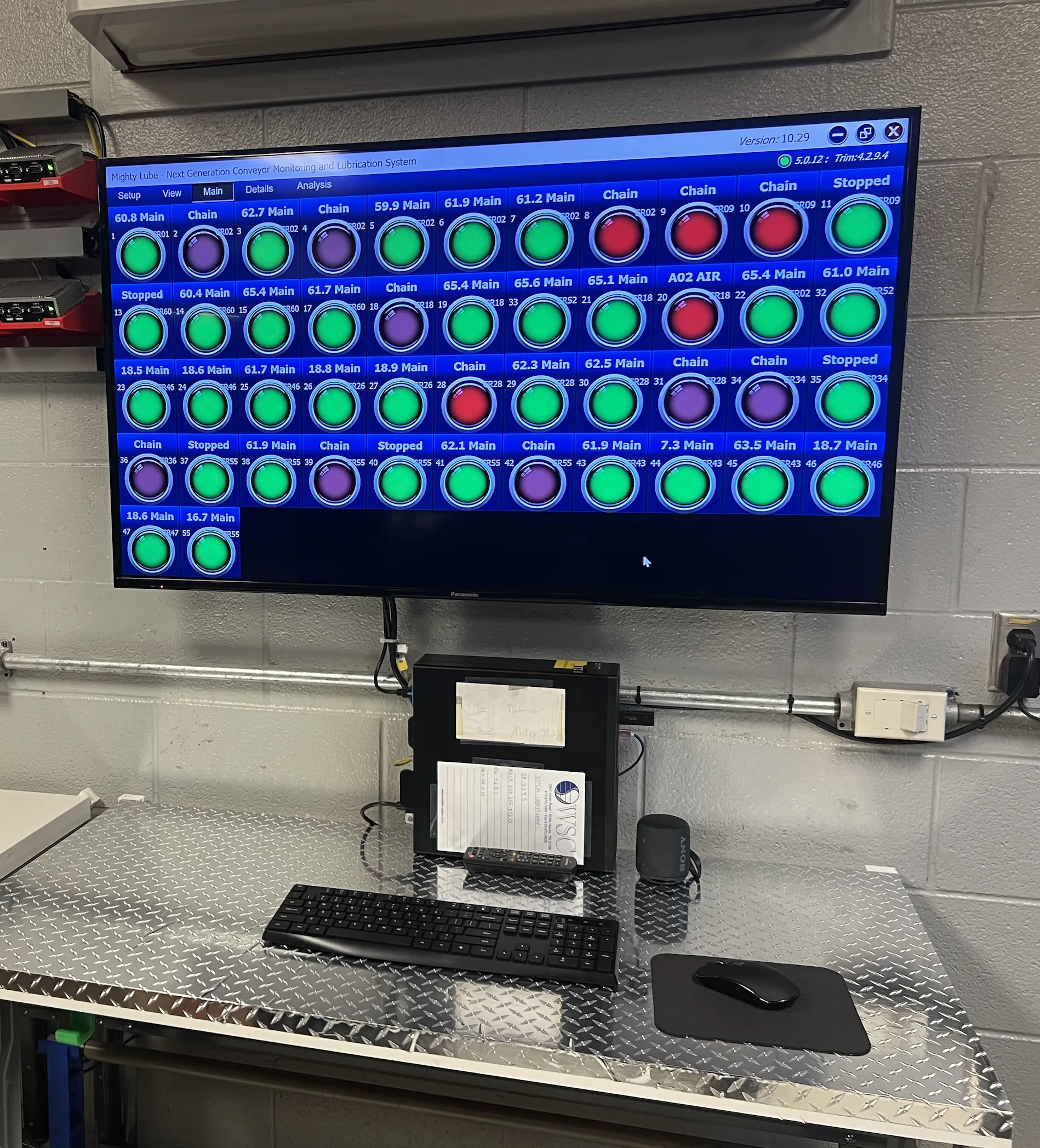
Continuous chain-wear monitoring helps teams track how the chain is changing over time. Instead of waiting for a manual measurement or a noticeable conveyor problem, reliability personnel can review wear data and identify areas that may require closer inspection.
Tracking chain wear can help teams:
- Recognize progressive chain elongation
- Identify uneven wear conditions
- Compare wear patterns over time
- Plan maintenance around actual conveyor conditions
- Reduce uncertainty when scheduling chain repair or replacement
This does not eliminate the need for preventive maintenance. It gives the maintenance team better information to guide it. When chain-wear information is combined with other conveyor vitals, teams gain a more complete view of what is happening across the system. For example, changes in chain condition may be reviewed alongside drive amperage, take-up pressure, speed, or lubrication history to help determine what deserves attention.
4. Time-Stamped Lubrication Cycle Records
Knowing that a lubricator is installed is not the same as knowing when lubrication occurred.
Time-stamped lubrication cycle records give maintenance teams a documented history of system activity. They can confirm when lubrication cycles were initiated and compare those events with changes in conveyor performance.
This visibility can help answer important questions:
- Did the lubrication system cycle as expected?
- When was the most recent cycle completed?
- Are lubrication cycles occurring at the correct intervals?
- Did conveyor conditions improve after lubrication?
- Does the lubrication schedule need to be reviewed?
Without recorded cycle information, teams may be left relying on assumptions or manually maintained logs. Time-stamped data creates a more reliable record that can support troubleshooting, preventive maintenance, and internal documentation.
It can also help teams separate lubrication-related concerns from other mechanical issues. If the system is completing its expected lubrication cycles but conveyor conditions continue to change, the maintenance team knows to investigate beyond cycle frequency alone.
Turning Conveyor Data Into Maintenance Decisions
The goal of conveyor monitoring is not simply to collect more information. It is to help reliability teams understand what the conveyor is doing and determine when action may be needed.
A strong monitoring strategy allows teams to:
- Establish normal operating conditions.
- Track changes between manual inspections.
- Identify trends that may indicate developing problems.
- Review chain wear and lubrication history.
- Schedule maintenance based on condition and risk.
For food processing facilities, this level of visibility can make maintenance more proactive and less dependent on guesswork. Teams can enter inspections with a clearer understanding of where to look, what has changed, and which assets may require priority attention.
Better Visibility for High-Stakes Production
Food processing plants cannot afford to overlook gradual changes in critical conveyor systems. Harsh conditions, demanding production schedules, and strict sanitation requirements make durable equipment and reliable information essential.
Waterproof stainless-steel construction helps monitoring hardware withstand the environment. Real-time conveyor vitals provide continuous operating visibility. Chain-wear monitoring reveals developing mechanical changes. Time-stamped lubrication cycles create a documented history of system activity.
Together, these capabilities give reliability teams a clearer picture of conveyor health – helping them move from periodic observation toward informed, condition-based maintenance. Want to see how conveyor monitoring could support your food processing facility? Contact Mighty Lube to discuss your conveyor, operating environment, and reliability goals.