
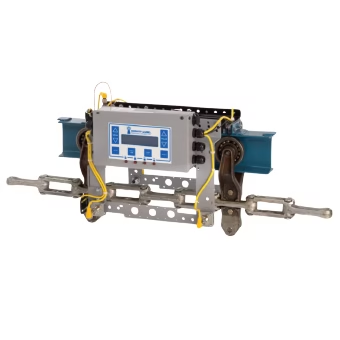
Traditionally, facilities have relied on manual conveyor monitoring, but advances in technology now make automated monitoring the smarter choice. Understanding the differences and the efficiencies gained using these solutions can help your facility make the leap from reactive maintenance to predictive excellence.
Manual Conveyor Monitoring: Limitations and Challenges
- Visual inspections of chain links, trolleys, and lubrication points.
- Recording measurements like chain wear, vibration, or temperature by hand.
- Relying on operator experience to identify potential issues.
- Reactive rather than proactive: Many issues are discovered after they cause downtime.
- Time-intensive: Inspections take labor hours away from other critical tasks.
- Subjective: Results can vary depending on the inspector’s experience.
- Limited data collection: Tracking trends over time is cumbersome, making predictive maintenance difficult.
Mighty Lube Conveyor Monitoring Options
Lubrication & Vitals Monitoring:
- Monitors lubrication cycles, reservoir levels, and vital conveyor health signals, like temperature, air pressure, and vibration.
- Provides visibility into daily operations without full predictive analytics.
- Ideal for plants that want simple deployment and a cost-effective solution.
Full Monitoring:
- Includes all Lubrication & Vitals capabilities.
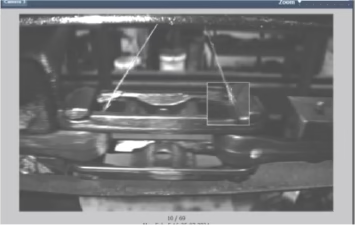
- Adds link-by-link chain wear tracking, trolley monitoring, and optional Vision Systems modules, like ChainVision™, TrolleyVision™, and LubeVision™.
- Converts raw conveyor data into actionable items to predict failures, plan replacements, and optimize long-term reliability.
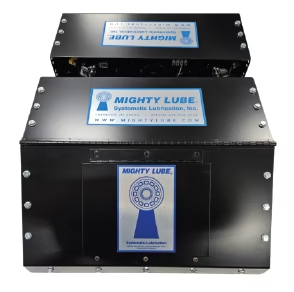
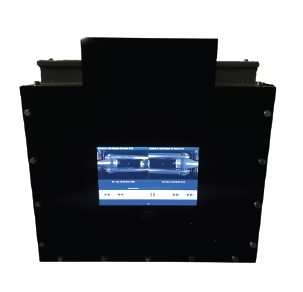
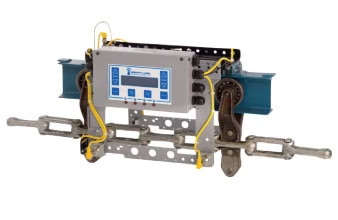
Permanent Conveyor Monitoring System:
- A scalable networked system for facilities with multiple conveyor lines (up to 100).
- Measures chain wear in link-by-link and 10’ sections, tracks drive amps, chain speed, take-up pressure, and drive hours.
- Integrates with Mighty Lube or OPCO lubrication systems for additional lubrication cycle data and reservoir monitoring.
- Features updated dashboards, alarms, and data export options to maximize visibility and efficiency.

Manual vs. Automated: The Bottom Line
The difference is clear: manual monitoring keeps you in the reactive lane, while automated monitoring puts you ahead of potential issues. Facilities using Mighty Lube’s Automated Conveyor Monitoring Systems enjoy better uptime, optimized maintenance schedules, and better long-term ROI.
Shifting from manual to automated conveyor monitoring is no longer just a luxury; it’s a smart investment in reliability and efficiency. Mighty Lube’s solutions empower teams to monitor, predict, and verify conveyor health with precision and confidence. By automating the tedious and error-prone aspects of manual monitoring, your maintenance program becomes smarter, faster, and more cost-effective.