Most conveyor failures don’t happen suddenly. They develop gradually—link by link, cycle by cycle—until one day production comes to a halt. By the time the issue becomes visible, the damage has already been done.
Conveyor chain wear is one of the most overlooked and costly problems in manufacturing and material handling operations. Not because it’s uncommon, but because it’s difficult to detect early. Many facilities still rely on visual inspections, scheduled maintenance routines, or checking systems during planned downtime. The problem is that conveyor chain wear often doesn’t show obvious signs until it has already progressed to a critical point, making costly conveyor failures difficult to avoid.
Without real-time visibility into conveyor system health, maintenance teams are forced to rely on assumptions and reactive maintenance strategies—leading to unexpected downtime, unplanned repairs, and lost productivity.
The Real Cost of Untracked Conveyor Chain Wear
When conveyor chain wear goes unmonitored, costs increase quickly across multiple areas of operation.
Facilities often replace conveyor chains too early, driving up unnecessary material and replacement costs. In other cases, chains are replaced too late, resulting in sudden conveyor breakdowns that stop production entirely. Excessive lubricant usage, rising energy consumption, emergency maintenance labor, and repeated inspections become part of the daily routine.
What makes conveyor wear especially expensive is that many of these costs accumulate gradually and remain hidden until they begin impacting production output, maintenance budgets, and equipment reliability.
Common hidden costs of conveyor chain wear include:
- Unexpected conveyor downtime
- Premature conveyor chain replacement
- Increased lubricant consumption
- Higher energy usage and drive amp loads
- Labor-intensive manual inspections
- Reduced conveyor efficiency and equipment lifespan
- Emergency maintenance and repair costs
Why Traditional Conveyor Maintenance Isn’t Enough
To accurately understand conveyor health, plants need more than surface-level inspections. Critical performance data such as conveyor chain wear, drive amps, chain speed, system tension, lubrication cycles, vibration, and temperature provide a much clearer picture of overall conveyor performance.
This is where conveyor monitoring systems play a critical role.
Modern conveyor condition monitoring technology allows facilities to continuously monitor conveyor systems in real time, helping maintenance teams identify wear patterns before they become failures.
Real-Time Conveyor Monitoring with Conveyor Guardian™
The Conveyor Guardian™ Monitoring System gives facilities the ability to continuously track conveyor performance and convert operational data into actionable maintenance insights.
Instead of relying on assumptions, maintenance teams can:
- Confirm lubrication events
- Monitor vibration and temperature conditions
- Track conveyor chain wear in real time
- Identify wear down to individual conveyor links or sections
- Detect developing conveyor issues before failures occur
This level of precision helps reduce unplanned downtime, minimize unnecessary chain replacements, and improve overall conveyor reliability.


Permanent Conveyor Monitoring for Large Facilities
For larger manufacturing facilities and operations managing multiple conveyor lines, the Permanent Conveyor Monitoring System expands visibility even further.
Designed to monitor up to 100 conveyors within a department, the system provides centralized, real-time insight into:
- Conveyor chain wear
- Drive performance and amp loads
- Lubrication activity
- Conveyor speed and system conditions
- Predictive maintenance trends
With access to continuous conveyor performance data, maintenance teams can shift away from reactive maintenance and toward predictive maintenance strategies based on actual equipment condition.
The Benefits of Data-Driven Conveyor Maintenance
Plants that implement real-time conveyor monitoring systems often experience measurable improvements in maintenance efficiency and equipment performance.
Benefits of predictive conveyor monitoring include:
- Fewer unexpected conveyor failures
- Improved conveyor chain replacement planning
- Reduced lubricant waste
- Longer conveyor equipment lifespan
- Lower maintenance costs
- Increased operational efficiency
- Reduced unplanned downtime
By using conveyor monitoring data to guide maintenance decisions, facilities can improve reliability while reducing overall operating costs.
Adding Vision Systems for Complete Conveyor Visibility
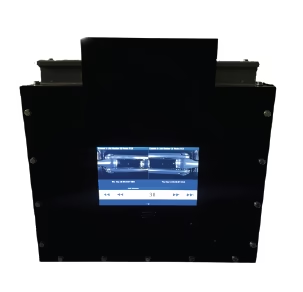
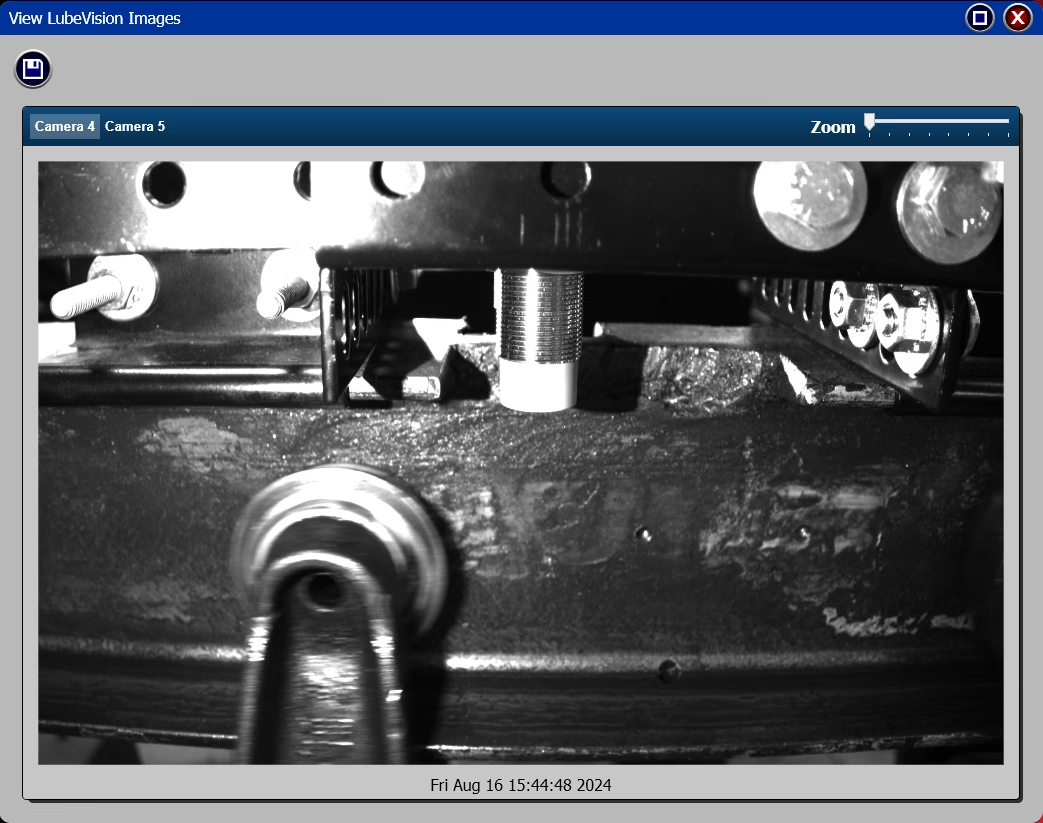
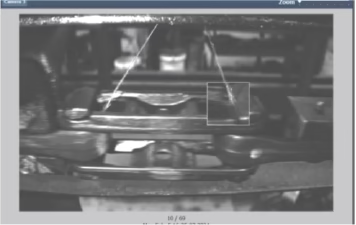
Today, conveyor monitoring goes beyond sensor data alone. Integrated Vision Systems allow maintenance teams to visually inspect conveyor conditions in real time.
Image-based conveyor monitoring helps facilities:
- Detect broken or cracked conveyor chain links
- Verify lubrication coverage
- Confirm conveyor operating conditions
- Improve maintenance accuracy and response time
This additional layer of visual verification ensures maintenance actions are not only completed but also effective.
ChainVision
TolleyVision
LubeVision
Stop Conveyor Failures Before They Stop Production
Conveyor chain wear may start small, but the operational and financial impact can grow quickly when left untracked. Real-time conveyor monitoring systems give facilities the visibility needed to detect wear early, reduce downtime, improve maintenance planning, and extend conveyor equipment life.
For manufacturers focused on conveyor reliability, predictive maintenance, and reducing unplanned downtime, continuous conveyor monitoring is no longer optional—it’s becoming essential.
The bottom line is simple. If you’re not tracking conveyor wear with real data, you’re likely spending more than you need to, whether it’s through premature replacements, excess lubricant use, or unexpected downtime. The question isn’t whether your conveyor is costing you money; it’s whether you know exactly where those costs are coming from and how to control them. The plants that do aren’t just maintaining their systems, they’re optimizing them.